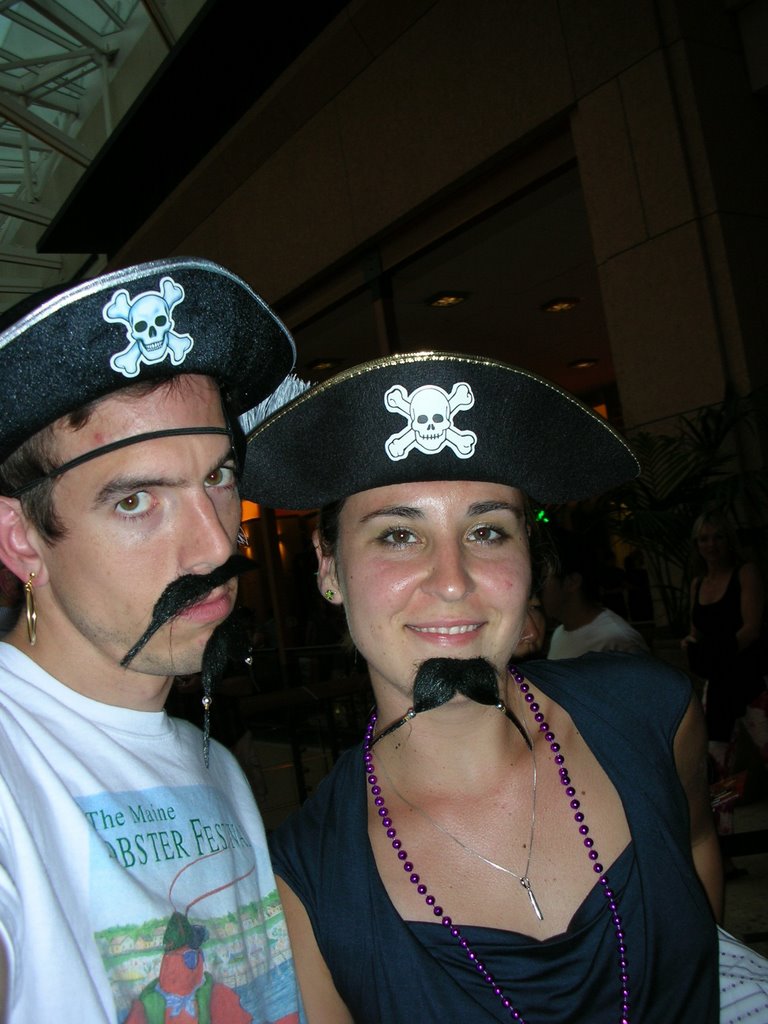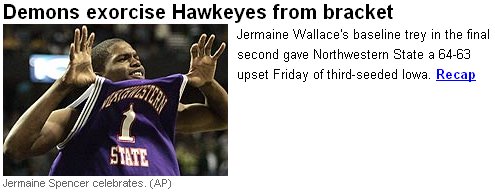





“The National Trial Competition (NTC) is one of the oldest and most prestigious mock trial competitions in the United States. Every ABA-accredited law school in the country is invited to compete... The competition will rely on more than 25 judges from the federal and state court systems, over 100 lawyers from the New Hampshire bar and 150 students from Pierce Law to act as judges, jurors and witnesses,” says Professor Albert ‘Buzz’ Scherr, director of the Pierce Law’s Trial Advocacy Program.
According to the Texas Young Lawyers Association homepage, "In addition to the prestige of competing at the top levels of one of the oldest, most respected trial competitions in the country, winning treams are provided many prize incentives. Customarily the Best Oral Advocate (and, if not on the same team, a member of the championship team) is invited to the ACTL annual meeting, at which the winning team is presented with a silver bowl and the $10,000 Kraft W. Eidman Award sponsored by Fulbright & Jaworski. The Best Oral Advocate receives the George A. Spielberg Award sponsored by Fried, Frank, Harris, Shriver & Jacobsen. The $5,000 award to the second-place team is sponsored by the firm of Beck, Redden & Secrest. "
Also, in other Google news, my clever girlfriend found out today that if you search for "search" in Google, Google is actually the 5th result from the top behind MSN Search and Lycos of all things.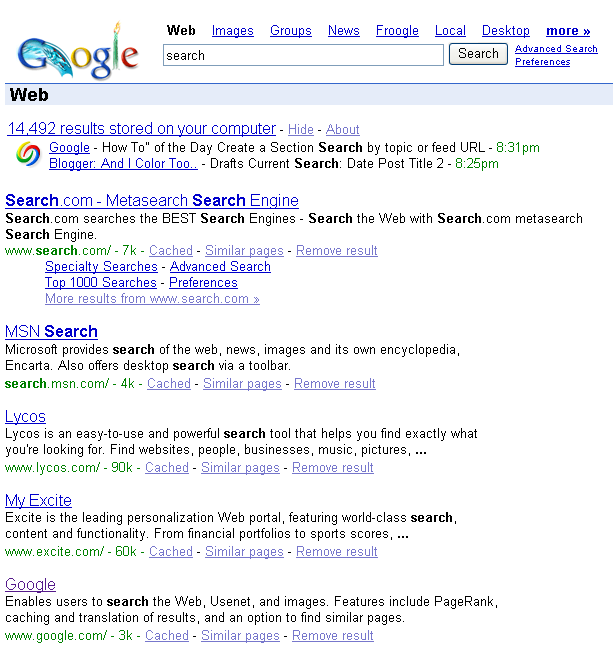


..., the generics implementation uses a technique known as erasure. The easiest way to understand erasure is to think of the compiler as performing two distinct tasks. First, it does type checking at compile time using all the type information it has (including the type parameters). Then it transforms the code, using a set of rules that remove all of the type parameters (e.g. all of the parameterized types are mapped to raw types), and inserts a set of casting operations. The complete list of transformations is beyond the scope of this article. However, to give you an idea of what erasure does, here are some of the rules:
There are two types of threads in Win32 architecture: UI threads, and worker threads. UI threads sit idle most of the time and wait for messages to arrive in their message loops. Once they receive a message, they handle it and then wait for the next message to arrive. Alternatively, worker threads are used to perform background processing and do not use message loops. Both the Windows timer and the server-based timer run using an Interval property. The interval of the thread timer is set in the Timer constructor. The timers are designed for different purposes, as evidenced by their handling of threads:
Windows Form Timer
This class wraps the counters we had in Win32 based on Windows messages. Use this class only if you do not plan to develop a multithreaded application. The Windows Forms Timer component has an Interval property that specifies the number of milliseconds that pass between one timer event and the next. Unless the component is disabled, a timer continues to receive the Tick event at roughly equal intervals of time. This component is designed for a Windows Forms environment. If you need a timer that is suitable for a server environment, see Introduction to Server-Based Timers.
The Interval Property
The Interval property has a few limitations to consider when you are programming a Timer component:
Thread safety: Any public static members of this type are thread safe. Any instance members are not guaranteed to be thread safe.
Server-Based Timers (System.Timers)
The Timer component is a server-based timer, which allows you to specify a recurring interval at which the Elapsed event is raised in your application. You can then handle this event to provide regular processing. For example, suppose you have a critical server that must be kept running 24 hours a day, 7 days a week. You could create a service that uses a Timer to periodically check the server and ensure that the system is up and running. If the system is not responding, the service could attempt to restart the server or notify an administrator. The server-based Timer is designed for use with worker threads in a multithreaded environment.
Server timers can move among threads to handle the raised Elapsed event, resulting in more accuracy than Windows timers in raising the event on time. For more information on server-based timers, see Introduction to Server-Based Timers.
Key Programming Elements of Server-Based Timers
The Timer component raises an event called Elapsed. You can create handlers for this event to perform whatever processing needs to occur. Some of the more important properties and methods of a Timer component include the following:
Thread safety: any public static members of this type are safe for multithreaded operations. Any instance members are not guaranteed to be thread safe.
Thread-timer (System.Threading.Timer)
Use a TimerCallback delegate to specify the method you want the Timer to execute. The timer delegate is specified when the timer is constructed, and cannot be changed. The method does not execute on the thread that created the timer; it executes on a ThreadPool thread supplied by the system. The callback method executed by the timer should be reentrant, because it is called on ThreadPool threads. The callback can be executed simultaneously on two thread pool threads if the timer interval is less than the time required to execute the callback, or if all thread pool threads are in use and the callback is queued multiple times.
When you create a timer, you can specify an amount of time to wait before the first execution of the method (due time), and an amount of time to wait between subsequent executions (period). You can change these values, or disable the timer, using the Change method.
As long as you are using a Timer, you must keep a reference to it. As with any managed object, a Timer is subject to garbage collection when there are no references to it. The fact that a Timer is still active does not prevent it from being collected.
Note: System.Threading.Timer is a simple, lightweight timer that uses callback methods and is served by threadpool threads. You might also consider System.Windows.Forms.Timer for use with Windows forms, and System.Timers.Timer for server-based timer functionality. These timers use events and have additional features.
Thread safety: This type is safe for multithreaded operations.
Other Timers
1. timeGetTime() : This Windows.DLL call can give you up to 1 microsecond of accuracy on some operating systems; however it can be up to 5 microseconds on Windows NT.
2. System.Tickcount (Environment.TickCount): Gets the number of milliseconds elapsed since the system started.
3. DateTime.Ticks: The value of this property represents the number of 100-nanosecond intervals that have elapsed since 12:00:00 midnight, January 1, 0001.
4. QueryPerformanceCounter: often used in C++ Windows games. Provides a high resolution timer of less than 1 microsecond. Not exposed in managed code, so you would have to write a wrapper for it.
References
Programming the Thread Pool in the .NET Framework
System.Timers Namespace
Introduction to Server-Based Timers
Timer Programming Architecture
Introduction to the Windows Forms Timer Component
Other C# Timer Resources
Comparing the Timer Classes in the .NET Framework Class Library (added 12/15/05 5:37PM)
http://www.mvps.org/directx/articles/selecting_timer_functions.htm (added 12/20/05 2:20)
The mvps link is very revealing; it discusses timers in the context of high performance games and evaluates them via benchmarking.




An article written about security in IT cites Ed Lazowska, a faculty member in my department at UW, and begins:
Ed Lazowska, cochairman of the President’s Information Technology Advisory Committee, says that there is a looming security crisis, and the government, vendors and CIOs aren’t doing enough to stop it.

Those restaurants that are forced closed are allowed to reopen when they "have remedied the conditions that have led to closure" -- Whew, that's a relief!
Interesting Finds
What I've noticed from my brief investigations is that American food places tend to do very well (e.g. Schultzy's, Big Time Brewery, even Jack in the Box), each maintaing a near perfect health inspection report (no score over 10). Schultzy's is one of my favorite places on the Ave. so I am fairly relieved there and many of my fellow Grad students hang out/eat at Big Time Brewery. Cheers to them as well.
The most common citation among all restaurants was "Food worker cards not available or current," which presumably means that (a) the restaurant is not keeping good records of their employees or (b) restaurants are hiring illegal immigrants. Admittedly (b) would be more likely in California.
Disgusting Finds (e.g. Point Winners)



 Which fortunately is just a picture of my Dad and not, say, an expose of Brad kissing Angelina... but you get the idea. For like a week, every picture I took with my S200 looked basically like this. Here's another one of my cousins and I at at my grandfather's house.
 In some ways, I can understand why my camera would be a bit tired -- 11,173 is a lot of pictures. BEyond that it has survived two falls off a countertop onto the floor, being carried for 2 years in the front pocket of my backpack, camping trips, etc. Overall, it's been a wonderful camera - I can't really criticize it - definitely one of the best pieces of technology I've ever owned (robust, easy to use, and typically did exactly what I wanted when I wanted).
 My girlfriend left them here so I ate them. I've never particularly liked Charleston Chews, yet I consumed them contently. I gravitated to them only because they were in my room staring at me and because I felt like something sweet; now I feel guilty (one serving is 19% of my daily saturated fat and 23 grams of sugar). I may have had three or four servings -- hard to tell given how voraciously I swallowed them down.